
The Art of Revolution
An overview of the art and the artists involved in creating art relating to revolutionary moments in history. We shall investigate how artists depicted revolutions and how these images resonate and influence. How do these images report true event and … More details …
Jon Singer Sargent and fellow artists
After the scandal of “Madame X” (1884), Sargent had to flee Paris. This course surveys what he did next, how he settled in London, and became the most sought-after portrait painter of his day. We also consider his surprising later … More details …
Bayeux Tapestry and Other Early Medieval Treasures
This six week course will focus on 6 early medieval objects including the Bayeux Tapestry and the Winchester Bible. Current knowledge of the making and history of each object will be discussed in detail. The Bayeux Tapestry is due to … More details …
Reading Paintings – The Dutch Golden Era
This day-school opens with a survey of the Dutch Golden Age in politics and art. We begin with the establishment of the Dutch Republic in 1588 and end with the Rampjaar (‘Terrible Year’) of 1672 when the French invaded and … More details …
The Art of Australia – Modern painting in the 20th century
How modern painting developed in Australia from the 1920s to the 1970s. This will include the wide range of painters of the post impressionist era known as the ‘Sydney Moderns’, the ‘Hiedi School and the painters of the post-war era.
More details ...The Art of Australia: After the Goldrush
How European art evolved in Australia from the 1860s to WW1. The Ideas of Nationhood influenced many artists during the late 19th century, this can be seen in the landscape and figurative painting of this period. The main focus for … More details …
Great Spanish Masters II
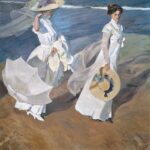
Joaquin Sorolla was a huge success in his own lifetime; his depictions of women, children and the sea proving highly popular with public and collectors alike. We look at how Picasso began, including his beautiful blue and rose periods, concluding … More details …
Reading Paintings: The Tudors
This day-school introduces the visual vocabulary and attributes used by painters in the 16th Century. The first illustration will be Bronzino’s “Allegory with Venus and Cupid” (c.1550). We will then consider other examples of allegory, particularly Hans Eworth’s strange portrait … More details …
Tite Street – Whistler, Wilde and Sargent
When Oscar Wilde saw Ellen Terry step out of a carriage in Tite Street dressed as Lady Macbeth (she was sitting for John Singer Sargent), he called it a street “full of wonderful possibilities.” Whistler, who lived just down the … More details …
The Art of Cornwall – St Ives
This course is now fully booked. Please contact us if you would like to be placed on the waiting list for any cancellations. This day-school will examine how the evolution of modern painting gained momentum during the middle of the … More details …
The Art of Cornwall – Newlyn and Lamorna
This course is now fully booked. Please contact us if you would like to be placed on the waiting list for any cancellations. This day-school will examine how the foundations of modern painting developed in Cornwall in the late 1880s … More details …
Florence and the Dawn of the Renaissance
Why did the renaissance start in Florence? Florentine art and history at the time of Fra Angelico, Uccello, Botticelli and others. What was it about 15th century Florence that provided the ingredients for an apparent explosion of art and culture? … More details …
Reading Paintings
This course is fully booked. Please contact us if you would like to be added to the waiting list for any cancellations. Explore the links between art and literature, from the Mona Lisa to The Lady of Shalott. We will … More details …
Paris 1925: The Birth of Art Deco and Modernism
This course is fully booked. Please contact us if you would like to be placed on a waiting list for any cancellations. A thoroughly French affair, the 1925 Paris Exposition Internationale Des Arts Decoratifs et Industrials Moderne was dominated by … More details …
Great Spanish Masters: El Greco, Velázquez, Goya
El Greco was born in Crete, but later painted in Italy and then Madrid and Toledo. His highly dramatic and expressionistic art was not appreciated in his own time, but much regarded in later centuries. His altarpieces and religious themes … More details …